I was in Class Three probably seven or eight years old in the year 2000 when my aunt (Phupho) died after suffering severe labour pain.
At that time, Dayis (traditional birth attendants) used to conduct deliveries at home with meagre medicines, little or no formal training, and virtually no protocols to manage complications or save a mother’s life. I still remember seeing my aunt crying in unbearable pain even after delivering her baby.
Today, we would recognize what she was suffering from as postpartum haemorrhage (PPH), a condition in which timely intervention, trained staff, appropriate protocols, medicines, blood, and intensive care can save a mother’s life.
But back then, such knowledge and facilities were largely beyond the reach of ordinary families. There was little awareness of emergency obstetric care, limited capacity-building of labour-room staff, and almost no access to affordable private healthcare for families like ours.
Everything was simply attributed to “Allah’s will.”
Years passed.
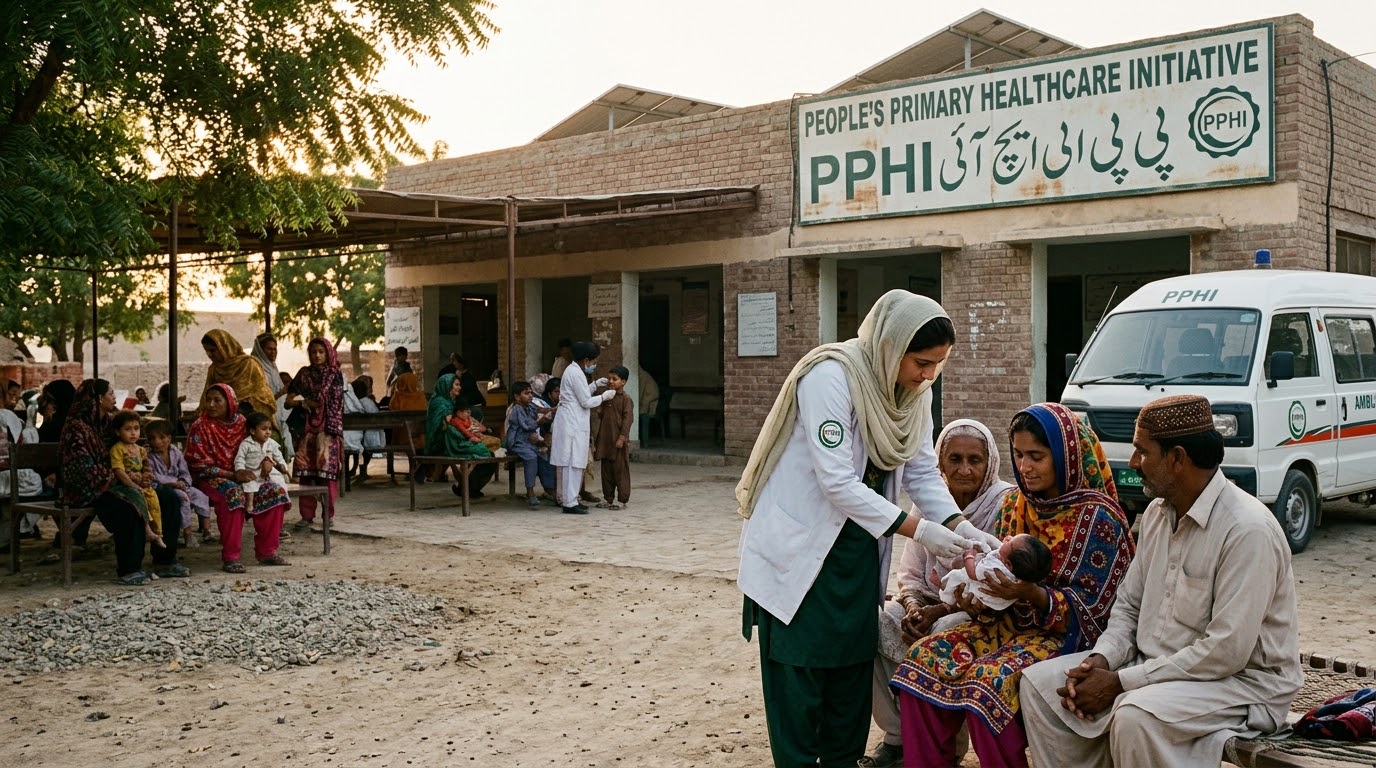
Then came an initiative—initially introduced on a trial basis for just 18 months in the form of PPHI, with a focus on strengthening primary healthcare.
What happened afterwards is a story of commitment, perseverance and transformation.
Because of its services and the dedication of its people, the initiative was extended. Over the years, PPHI continued working relentlessly to make primary healthcare more patient-centric, accessible and responsive.
It helped make normal deliveries normal again.
It provided free primary healthcare to people who could not afford private treatment.
It introduced eight free diagnostic tests at its health facilities.
It supported undernourished and malnourished children through food and financial assistance.
It strengthened vaccination services and worked to protect children from preventable diseases.
It invested in the training and capacity-building of Lady Health Staff and healthcare workers, particularly in maternal and newborn care—so that tragedies that were once accepted as destiny could increasingly be prevented through knowledge, protocols and timely intervention.
This is not merely an organizational achievement.
For many families, it is the difference between life and death.
The legacy has become so significant that there is now serious consideration of entrusting more primary healthcare facilities to PPHI.
And yet, ironically, some individuals who have spent years serving within PPHI, benefiting from its opportunities, salaries, recognition and health facilities, now appear to be participating in media trials against the very organization that gave them the platform to serve.
An organization that gave them an opportunity to serve humanity.
An organization through which they earned their livelihood.
An organization through which they had the opportunity to earn Sawab-e-Jariya by serving the poor.
An organization that provided them with respectable salary packages and employee benefits, including health cards.
Perhaps we should ask ourselves:
What exactly deserves to be put on trial?
Yes, PPHI needs to be “trialed.”
Trial it against the standards of the past.
Trial it against the villages where mothers once delivered babies without trained assistance.
Trial it against the families who could never afford private clinics.
Trial it against the children who once had no access to basic healthcare.
Trial it against the mothers who died from complications that could have been prevented.
And if PPHI is guilty of something, perhaps its greatest “crime” is this:
It has tried to serve on merit where chaos has often prevailed.
It has taken healthcare to people who had little else.
It has cared for the poor when the poor had nowhere else to go.
So yes PPHI should be trialed.
But let the trial be conducted before the people whose lives have been touched by its services.
Let the verdict come from the mothers who survived.
From the children who received treatment.
From the families who received healthcare without being asked whether they could afford it.
And from the countless people in remote areas who, for the first time, found a healthcare worker standing between them and helplessness.
Because sometimes, when an organization becomes a voice for the poor, those who benefit from the old chaos may mistake accountability for an attack and service for a threat.
PPHI may not be perfect. No institution is. It must be questioned, evaluated and improved wherever necessary.
But criticism should never erase its legacy.
And its legacy deserves to be judged not by a few headlines, but by the millions of lives it has touched.
Yes, PPHI needs to be trialed. But let us first decide what the real charge is: serving the poor or failing to remain silent while doing it.