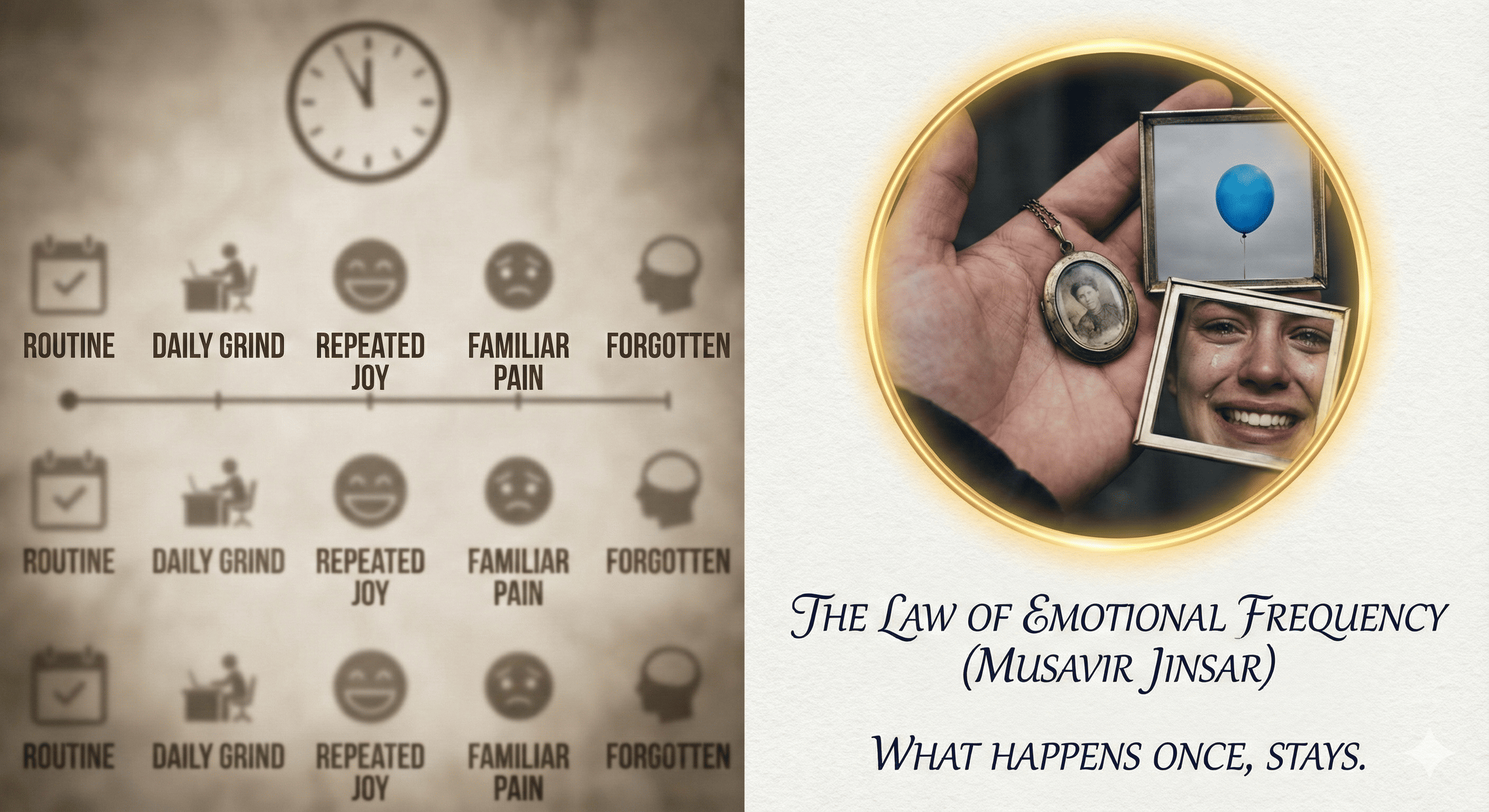
Why do we forget major events (both joyful and tragic) in life, yet remember small, seemingly insignificant moments forever?
“Our minds tend to forget even the biggest joyful or tragic events when they occur frequently. When pain or happiness becomes a routine, we grow used to it — it no longer leaves a deep mark. Familiarity dulls emotional intensity over time. However, rare moments — no matter how small — stay etched in our subconscious because of their uniqueness. These one-time events, whether joyful or heartbreaking, break the rhythm of our emotional experiences and become unforgettable.”
We remember what stands out, not what repeats. Unforgettable experiences often share one or more of these traits:
- Something that happens once in a lifetime — a fleeting smile from a stranger that changed your mood or a failure that taught you more than success ever could.
- A moment you never saw coming, making it powerful and vivid.
- Moments where emotions were intense, regardless of the scale of the event.
- When you defy expectations or fall short of them, the impact is amplified by how society views it.
- Achievements or failures that carried deep personal value — something you longed for or feared deeply.
Memory isn’t about the size of the event; it’s about emotional contrast, rarity, and personal significance.
What happens every day fades? What happens once, stays.